SEO Best Practices for Modern Web Applications
Discover the essential SEO strategies that will help your web application rank higher in search results and attract more organic traffic.
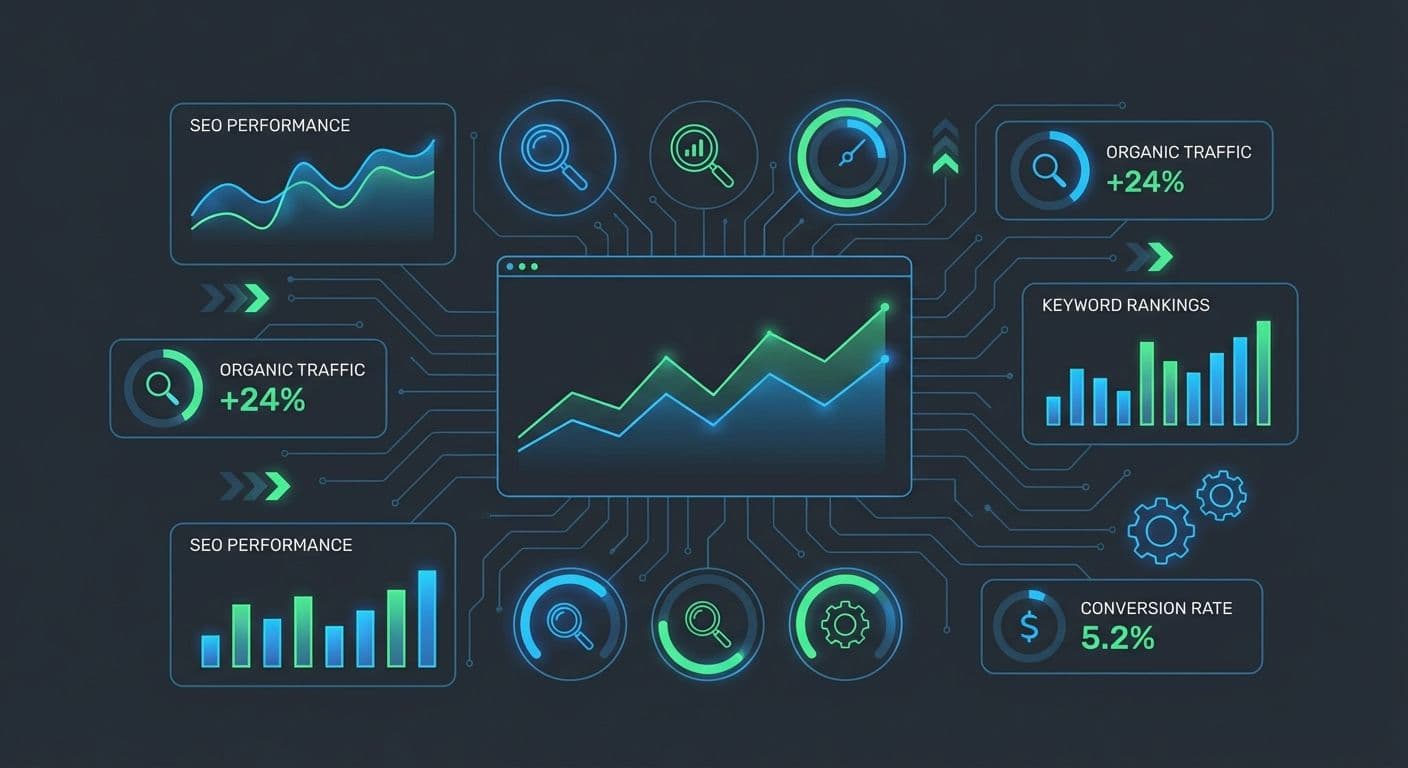
Search Engine Optimization (SEO) continues to evolve rapidly. What worked in 2023 may not be effective in 2025. Google's algorithms have become smarter, user expectations have increased, and new technologies like AI are reshaping how we approach search optimization.
In this comprehensive guide, we'll explore the most important SEO strategies for modern web applications, backed by the latest research and real-world results.
Core Web Vitals: The Foundation of Technical SEO
Google's Core Web Vitals are no longer optional—they're essential ranking factors. These metrics measure real-world user experience and directly impact your search rankings.
LCP (Largest Contentful Paint) measures loading performance. Your main content should load within 2.5 seconds. To achieve this, optimize images, use a CDN, and implement lazy loading for below-the-fold content.
INP (Interaction to Next Paint) replaced FID in 2024. It measures responsiveness throughout the entire page lifecycle, not just the first interaction. Keep it under 200ms by optimizing JavaScript execution and reducing main thread blocking.
CLS (Cumulative Layout Shift) measures visual stability. A score below 0.1 is good. Always define image dimensions, avoid inserting content above existing content, and use CSS transforms for animations.
E-E-A-T: Building Trust and Authority
E-E-A-T stands for Experience, Expertise, Authoritativeness, and Trustworthiness. Google uses these signals to evaluate content quality, especially for YMYL (Your Money or Your Life) topics.
To improve your E-E-A-T:
- Include author bios with credentials and experience
- Link to authoritative sources and cite research
- Keep content updated with fresh information
- Build quality backlinks from reputable sites
- Display trust signals like reviews, certifications, and secure connections
Technical SEO Essentials
Technical SEO ensures search engines can crawl, index, and understand your content. Here are the must-haves for 2025:
Structured Data and Schema Markup
Implement JSON-LD structured data to help search engines understand your content. Use schemas like Article, Organization, FAQ, and HowTo to enhance your search results with rich snippets.
Mobile-First Optimization
Google uses mobile-first indexing, meaning it primarily uses the mobile version of your site for ranking. Ensure your mobile experience is flawless with responsive design, touch-friendly navigation, and optimized fonts.
URL Structure and Internal Linking
Use clean, descriptive URLs with keywords. Build a strong internal linking structure to help search engines discover content and distribute page authority throughout your site.
Content Quality in the AI Era
With AI-generated content flooding the web, original, high-quality content is more valuable than ever. Google's helpful content update rewards content created for humans first, not search engines.
Focus on creating unique value: share original research, provide expert insights, and solve real problems your audience faces. Content that demonstrates first-hand experience will outperform generic AI-generated articles.
Conclusion: SEO is a Long-Term Investment
SEO success doesn't happen overnight. It requires consistent effort, technical excellence, and high-quality content. By focusing on Core Web Vitals, building E-E-A-T, and creating genuinely helpful content, you'll build a sustainable competitive advantage.
Ready to improve your website's SEO? Contact Lima Web Studios for a free audit and discover how we can help you rank higher and drive more organic traffic.
You might also like

Local SEO for Brazilian Businesses in Massachusetts: A Practical Guide
Your customers are searching Google right now. Are they finding you? This practical guide explains local SEO for immigrant-owned businesses in Massachusetts — no jargon, no empty promises.
How to Appear on Google Maps in the US: A Guide for Local Businesses
Over 80% of local mobile searches lead to a visit or call within 24 hours. This step-by-step guide shows you exactly how to get your business showing on Google Maps in Massachusetts.

Local SEO for Hispanic Businesses in New England: A Practical Guide
Over 900,000 Hispanics live in Massachusetts. Most Hispanic-owned businesses are invisible on Google. This guide explains exactly what to do — step by step — to change that.